Selected site
—
ship-hours in the core habitat, past 12 months
—
last month's ship-hours
—
largest vessel type
Ship-hours per month, by vessel type
Whale shark season
Cargo
Tanker
Passenger
Fishing
Other

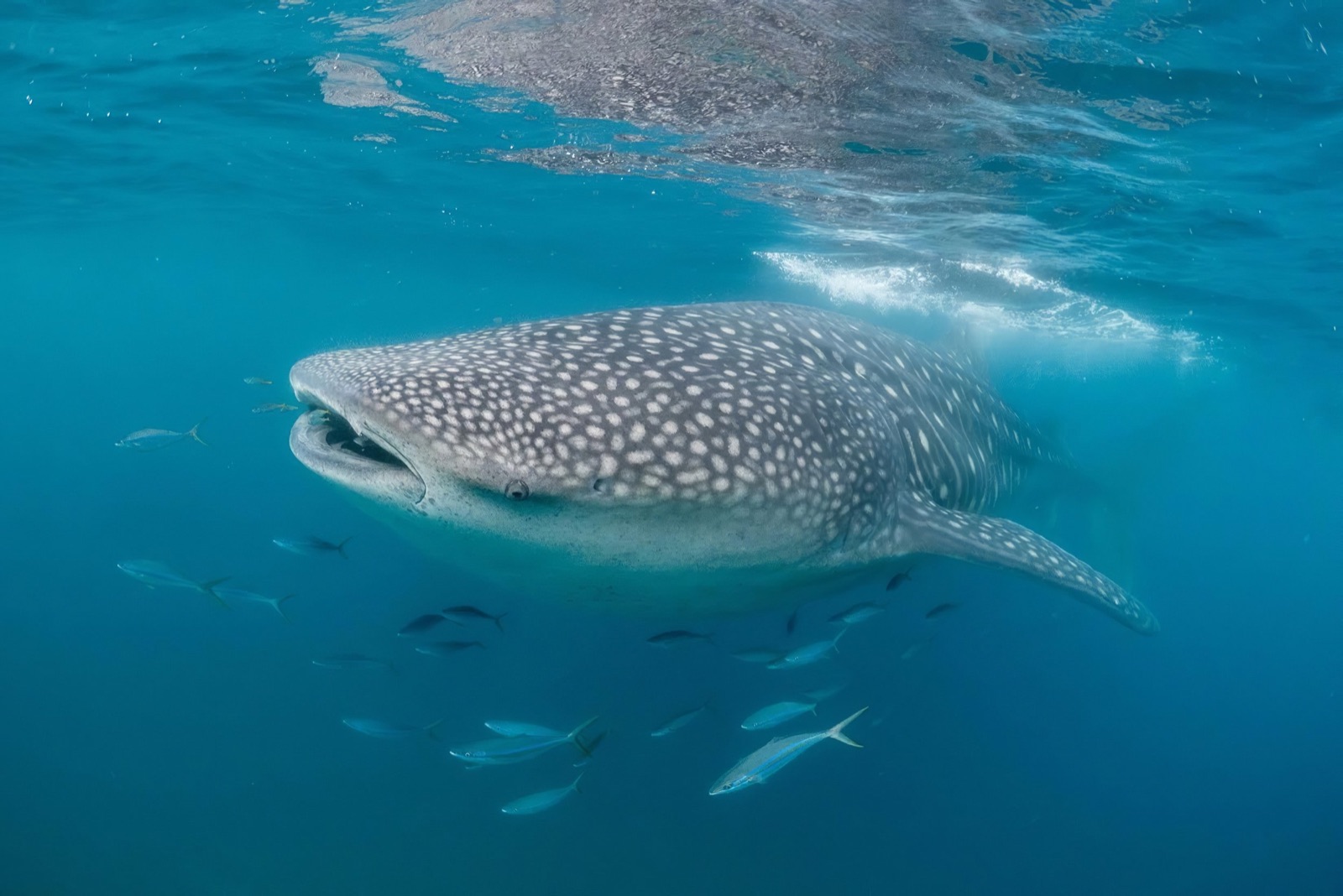
Whale sharks spend much of their time at the surface, in the same waters as some of the world’s busiest shipping routes. Collisions are almost never recorded, so we measure the next best thing: how much ship traffic passes through the places whale sharks depend on. Collisions are almost never recorded, so we measure how much ship traffic passes through the places whale sharks depend on.
Ship traffic through each whale shark core habitat, by vessel type
MMF scientists co-authored the global studies that established ship strike as a serious threat to whale sharks: where vessel traffic and whale shark habitat overlap, which sites most need collision management, and how a warming ocean will push whale sharks further into busy shipping routes. The 53 core habitats on this map come from that work.
Global Fishing Watch ship-hours are sampled vessel presence in each core habitat and update monthly. Past 30 days shows observed vessel-days from the free AIS feed: each detected vessel counts once per UTC day. AIS reception is incomplete, especially in tropical waters, so missing observations do not mean no ships were present.
Womersley et al. (2022) Global collision-risk hotspots of marine traffic and the world’s largest fish, the whale shark. PNAS 119(20).
Womersley et al. (2024) Identifying priority sites for whale shark ship collision management globally. Science of the Total Environment 934.
Womersley et al. (2024) Climate-driven global redistribution of an ocean giant predicts increased threat from shipping. Nature Climate Change 14.